

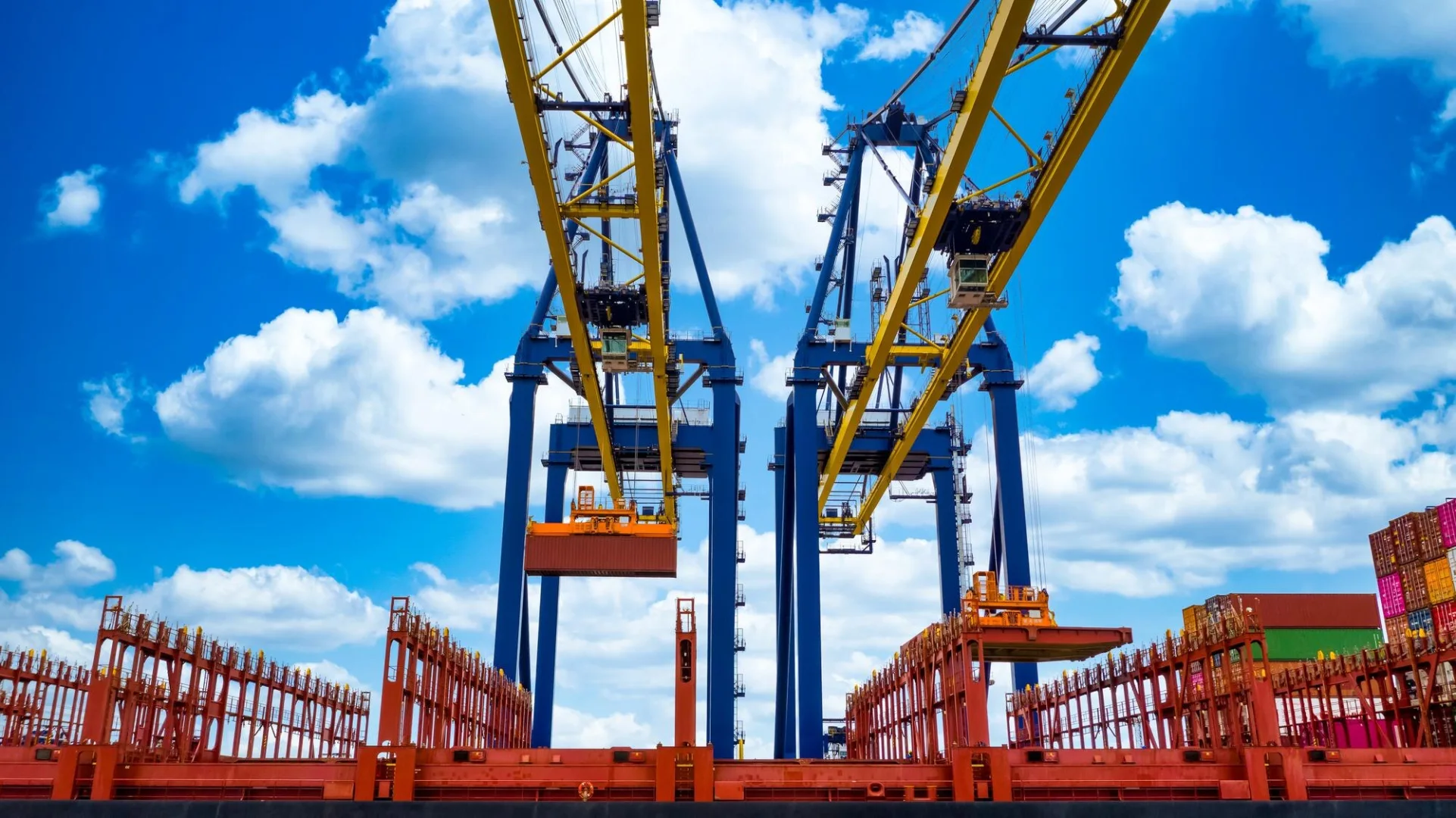
A port crane lifting several tons over a terminal in operation leaves no room for improvisation - the reach of a lift that fails doesn't just affect whoever operates the equipment, but anyone, any vessel, or any structure within the load's range. It's a combination of weight, height, and the constant movement of people and vehicles that demands procedural discipline from start to finish of every maneuver.
NR-11 regulates the transport, handling, storage, and movement of materials in Brazil. After years operating and coordinating cargo handling at port terminals, we put together this guide on the pillars that keep a lift safe - and the mistakes that show up most when the rush to clear the next vessel outweighs procedure.
WHAT MAKES PORT CARGO HANDLING A DIFFERENT RISK
Lifting cargo at a port terminal means operating heavy equipment over an area that is rarely still: other crews moving around, vehicles in motion, and the vessel itself shifting with the tide and wind. Unlike an isolated lift in a factory, here the operator must constantly account for who and what is within the load's range - and wind, which can change a suspended load's behavior in seconds, is a factor NR-11 treats as a core part of planning, not an unforeseen event.
6 PILLARS OF NR-11 FOR CARGO HANDLING
A lifting operation that repeats without incident, shift after shift, follows the same fundamentals:
Specific Training for Operation
Formal training and periodic refreshers for crane operators and signalers, with documented authorization before any maneuver.
Signage and Area Isolation
Physical isolation of the area under the suspended load, keeping people not involved in the maneuver from entering during the lift.
Periodic Inspection of Cables and Equipment
Regular inspection of wire ropes, chains, hooks, and safety latches, discarding any item showing signs of wear before use.
Lift Plan and Load Limit
Prior calculation of weight, center of gravity, and equipment capacity for that specific maneuver, never by estimation.
Communication Between Operator and Signaler
Standardized signals (hand or radio) agreed on before the maneuver starts, with no room for improvised interpretation.
PPE Specific to Cargo Handling
Helmet, protective footwear, and high-visibility vest for everyone working near the lifting area, not just the direct crew.
COMMUNICATION FAILURE: THE WEAKEST LINK IN A LIFT
Among every element of a lifting maneuver, communication between operator and signaler is often the weakest link - not for lack of technical knowledge, but because it depends on two people interpreting the same signal the same way, amid machine noise and visual distance. An ambiguous signal or a radio with interference can make the operator move the load the wrong way at the wrong moment - which is why NR-11 requires standardized signals agreed on before the maneuver begins, rather than relying on improvisation in the heat of the operation.
MOST COMMON MISTAKES IN CARGO HANDLING
- Lifting without a formal load plan - relying on the operator's experience to estimate weight and center of gravity instead of calculating from real data
- Area under the load not isolated - allowing other crews to keep moving under or near the load's range during the maneuver
- Cable inspection skipped as routine - assuming the equipment is in good condition just because it worked normally on the previous shift
- Operation continued above the wind limit - continuing to lift large-surface loads even with gusts that compromise control of the load
- Informal signaling between operator and signaler - using non-standardized gestures agreed on the spot, with no clear prior alignment
CARGO HANDLING WITHIN A COMPLETE PORT PARTNER
Safe cargo handling is one of the fronts that make up a complete port operation, alongside equipment and dock infrastructure maintenance. We detail what to expect from a partner that covers all these fronts in the guide below.
CONCLUSION
Safety in cargo handling isn't about trusting the operator's experience at the moment of the lift - it's about making sure the load plan, area signage, and communication with the signaler are set before the load ever leaves the ground. NR-11 exists because once a load is suspended, there is no room to fix a planning mistake mid-maneuver.
Frequently Asked Questions
It is the Brazilian regulatory standard covering the transport, handling, storage, and movement of materials - it ranges from operator training to signage and load planning in lifting operations.
Because a gust can change a suspended load's behavior in seconds, especially for large-surface loads - that's why NR-11 treats the wind limit as a stop-work criterion, not an unforeseen event to be managed on the spot.
It is the prior calculation of the load's real weight, its center of gravity, and the equipment's capacity for that specific maneuver - it replaces estimation by experience, which is one of the most common causes of cargo-handling accidents.
Crane operators and signalers need formal training and periodic refreshers, with documented authorization - but area signage and PPE use apply to anyone moving near the operation, not just the direct crew.
Because it depends on two people interpreting the same signal the same way, amid noise and visual distance - an ambiguous signal can lead to the wrong move at the wrong moment, which is why signals need to be standardized and agreed on before the maneuver, not improvised during it.