

On a shipyard, the same shift often brings together welding, confined spaces, work at height, and a potentially flammable atmosphere - sometimes on the same vessel, just a few meters apart. It's a combination of risks that rarely shows up together in other industrial settings, which is exactly why shipbuilding and ship repair have their own safety standard, broader than any single risk-specific regulation.
NR-34 regulates working conditions and environment in Brazil's shipbuilding and ship repair industry. After years working in dry docks, on decks, and in compartments of vessels under maintenance, we put together this guide on the pillars that keep ship repair safe - and the mistakes that show up most when dock schedule pressure outweighs procedure.
WHAT MAKES A SHIPYARD ENVIRONMENT DIFFERENT
A vessel under repair isn't an ordinary construction site: ballast and fuel tanks sit just meters from where welding happens, access to holds and engine rooms goes through narrow hatches classified as confined spaces, and work on multiple fronts - hull, deck, engine room - happens at the same time, often in simultaneous shifts from different crews. NR-34 exists because no single standard for confined spaces, hot work, or height alone covers this specific overlap of risks found in the naval environment.
6 PILLARS OF NR-34 FOR SHIPBUILDING AND SHIP REPAIR
A ship repair job that moves forward without incident, from the start of the dock period to the end, follows the same fundamentals:
Specific Training and Qualification
Documented training for each risk-bearing role - welding, confined space, hot work - before any professional takes on the activity aboard the vessel.
Work Permit
Formal authorization per activity and per compartment, issued before work starts and revalidated every shift.
Hot Work and Flammable Atmospheres
Explosivity testing and a specific release before welding or cutting near tanks, engine rooms, or compartments with fuel residue.
Signage and Area Isolation
Physical delimitation of each work front, keeping unauthorized people from moving between hatches, scaffolding, and risk areas.
Naval-Specific PPE
A combination of respiratory, hearing, fall, and spark protection matched to the activity and the compartment.
Waste and Chemical Management
Controlled disposal of paints, solvents, and blasting residue, avoiding contamination of the hull, the water, and the crews themselves.
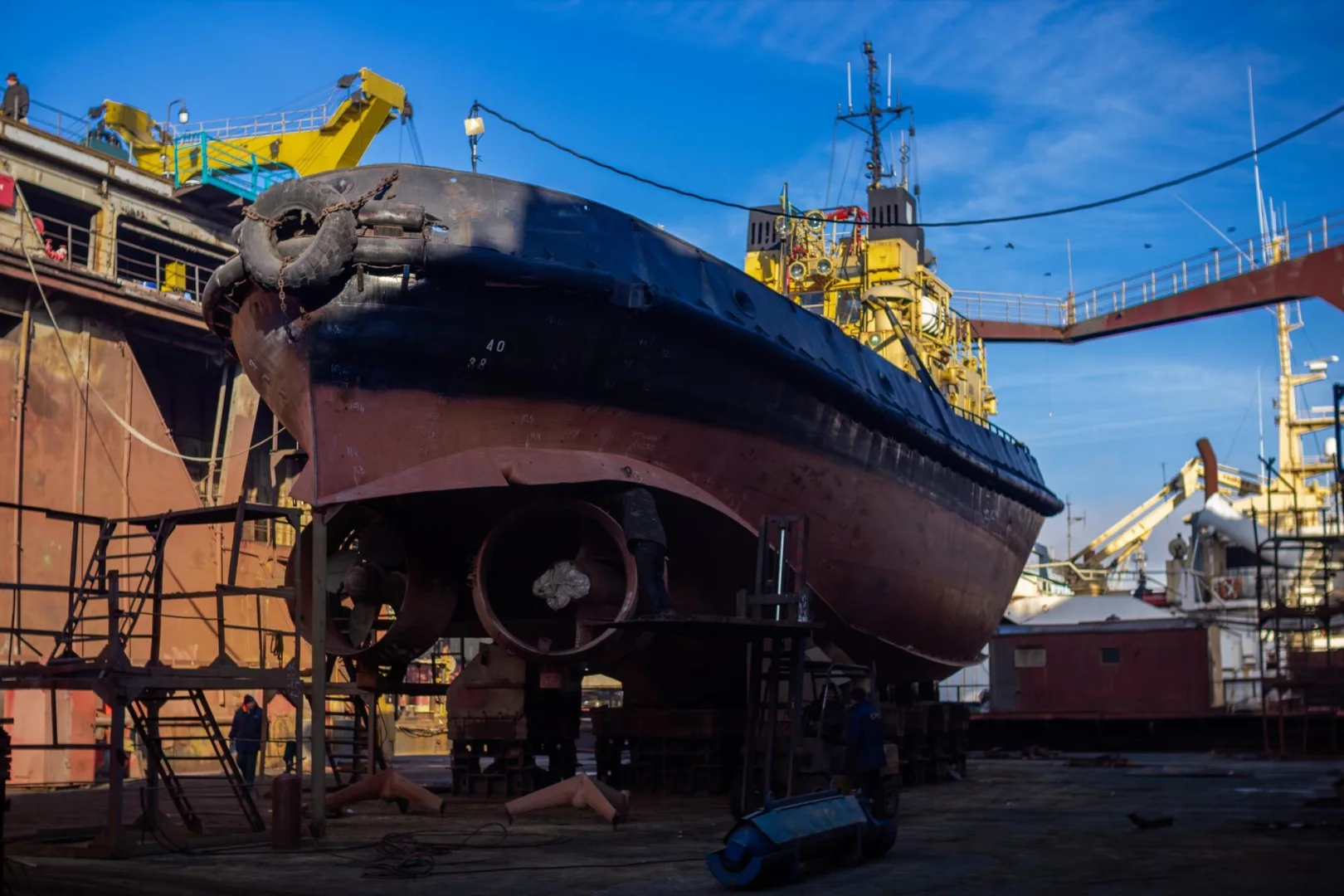
HOT WORK NEAR FUEL RESIDUE: THE RISK THAT SURPRISES MOST
One of the most underestimated risks in ship repair is residual explosive atmosphere - fuel or flammable-product vapors that remain in "empty" tanks long after visible emptying. Welding or cutting near these compartments without explosivity testing and without the work permit's formal release is one of the most recurring causes of serious shipyard accidents, precisely because the space looks safe to the naked eye.
MOST COMMON MISTAKES IN SHIP REPAIR
- Skipping the explosivity test - trusting a tank is safe just because it was visually emptied, without instrumented measurement of the atmosphere
- Generic work permit - using a single permit for multiple fronts and compartments, instead of a specific authorization per activity and location
- Overlapping fronts without coordination - welding above an open hatch where another crew is working in a confined space, with no communication between the activities
- Standardized instead of specific PPE - using the same protective set on the hull, deck, and engine room, ignoring that each environment has a different dominant risk
- Informal waste disposal - discharging blasting residue or solvent without control, contaminating the shipyard's water and exposing the crews themselves
BOILERMAKING AND FABRICATION WITHIN THE SAME SAFETY STANDARD
Much of ship repair work is, in practice, boilermaking and fabrication applied to the vessel's hull and structures - and the same welding-quality and dimensional-control care applies here. We detail how to guarantee quality in this type of fabrication in the guide below.
CONCLUSION
Safety in shipbuilding and ship repair isn't about applying one standard at a time - it's about recognizing that confined spaces, hot work, height, and flammable atmospheres happen together, on the same vessel, often in the same shift. NR-34 exists exactly to cover that overlap, which is why the work permit, specific training, and coordination between fronts need to move together, not in parallel.
Frequently Asked Questions
It is the Brazilian regulatory standard covering working conditions and environment in the shipbuilding and ship repair industry - it addresses the overlap of risks (confined spaces, hot work, height, flammable atmospheres) typical of shipyards and dry docks.
It is fuel or flammable-product vapor that remains in a tank even after it looks empty - invisible to the naked eye, only detected through instrumented explosivity testing before any hot work nearby.
Because each compartment and activity has a different dominant risk - a single permit for multiple fronts doesn't identify the specific controls needed at each location, nor prevent uncoordinated overlap between crews.
Every professional performing risk-bearing activity inside the shipyard or the vessel under repair - welding, confined space, work at height, hot work - with documented qualification before taking on the role.
NR-34 doesn't replace these standards, it integrates them: confined space inside a vessel's tank follows NR-33, scaffolding work on the hull follows NR-35, but NR-34 coordinates the overlap of these risks specific to the shipbuilding and ship repair environment.